Email me!

Monday, March 12, 2012

Computer Lab / Julius Caesar, V.i

Grade 12
  • In computer labs to get Hamlet essays started.
  • Warning: No personal pronouns, idioms, etc. Any outside resources must be cited correctly. This is a two grade paper which WILL be graded without mercy. :-)
  • Deathline = Friday.
Grade 10
  • Pd 6:
  • Journal: freewrite
  • Intro to Act V, read page 420, "Guide for Reading"
  • Read scene 1. Consider the encouter between the 4 major characters. What is revealed?
  • Summary/Analysis: Possible litereary elements: foreshadowing, characterization, symbolism, conflict
  • Pd 8 (behind because of the assembly on Friday and the technical difficulties on Thursday.):
  • Finish video and quiz.

Friday, March 09, 2012

Hamlet Exam / Finish Act IV Quiz

Grade 12
  • Multiple choice part of the exam was given today.
  • Will be in Mr. G's room Mon and Tues to work on essays. (Due 3/16).
  • This essay will be held to a very high standard! Manage your time wisely to do your best work!
Grade 10
  • 6th period finished the quiz, then we did some prep for the midterm assessment.
  • 8th period saw the play preview. Will catch up next week.

Thursday, March 08, 2012

Video Day II plus Essay Planning / JC Act IV Quiz

Grade 12
  • Finished video.
  • Essay planning: Students strongly encouraged to plan this essay carefully and begin gathering the citations necessay. If Sparknotes text is going to be cited, the citation should be annotated as follows: ex.: (V.ii.120,121sn)
  • We will dedicate 2 days in the computer lab next week (Mon and Tues).
  • Essay is due on Friday the 16th.
Grade 10
  • After finishing the video, quiz was begin. Those who need more time will be given 10 minutes at the beginning of the period tomorrow.

Wednesday, March 07, 2012

Video Day!

Grade 12
  • Went over Act 4 quiz.
  • Started Act 5 video.
  • We will finish the video tomorrow. The remainder of the period will be dedicated to planning the essay, which we will work on in the computer lab Monday and Tuesday. However, this essay will require very careful planning for it to be successful. The essay question MUST be chosen for tomorrow's class.
  • Multiple choice part of the exam will be on Friday.
  • The essay will be worth 2 grades. The multiple choice exam 1, and notes 1. That's 4 major grades being collected between now and the end of next week!
Grade 10
  • Went over Act 3 quiz.
  • Started Act 4 video. Will finish tomorrow and start the quiz.
  • Notes need to be in good shape!

Tuesday, March 06, 2012

Goodnight, Sweet Prince / Julius Caesar IV.iii.239-307

Grade 12
  • Finished the play!
  • Discussed a lot!
  • How is the story structure balanced?
  • Hamlet's transformation, finally!
  • Did the characters who died have to die?
  • What conclusions can be drawn re the stories themes of revenge, justice and death?
  • We'll go over Act IV quiz tomorrow and start the video.
  • Thursday, finish the video.
  • Friday, multiple choice test.
  • Monday and Tuesday: computer lab to work on essay (due 3/16)
Grade 10
  • Journal: How is Brutus his own worst enemy?
  • IV.iii.238-307
  • What qualities does Brutus show in the scene with Lucius?
  • What purpose does the ghost serve?
  • Go over Act III quiz tomorrow, begin video.

Monday, March 05, 2012

Hamlet V.ii. to 332 / Julius Caesar IV.iii.162-237

Grade 12
  • Review: How has Hamlet's character evolved? What was the stimulus for this change? Discuss.
  • Of all the principle characters, which has nothing to atone for?
  • Analyze Hamlet's apology to Laertes.
  • How does Laertes react to Hamlet?
  • How dies the plan go wrong?
Grade 10
  • Journal: How has your opinion of Cassius changed?
  • Discuss and review play citations. For the l;ast quiz and the essay for the play, correct citations need to be given for each specific reference of the play. The format is (Act.scene.line numbers); (IV.iii.35-36) or (4.3.35-36)
  • Read IV.iii.162-237
  • Discuss: Why does Brutus not tell Messala about Portia? How do Brutus' and Cassius' fatal flaws reveal themselves yet again?

Friday, March 02, 2012

Well, Today was Peculiar.

Due to today's "disruption," only periods 1 and 3 were productive. We'll just regroup on Monday. If you owe Shakespeare notes, take advantage of the weekend to get them together and submit them on Monday.

Have a great weekend!

Wednesday, February 29, 2012

Hamlet V.ii / Antony's Funeral Speech

Grade 12
  • V.ii 1-208
  • Question to be discussed next time: Why Osric? What's Shakepeare's point with this character?
Grade 10
  • Went over the Antony Funeral Oration assignment. Students had an opportunity to earn more points.

Tuesday, February 28, 2012

Hamlet V.i, Continued / Julius Caesar IV.iii

Grade 12
  • Review.
  • V.i.224-319 (end of scene)
  • Great discussion on the multiple layers of this important section of this scene (Ophelia's funeral).
  • Questions: What inspires Hamlet's behavior? Is he being genuine? How do you know? What is the nature of Hamlet's behavior? What has been revealed about Laertes? Why does Hamlet seem confused by Laertes' anger?
  • Summary and analysis:  LINK
  • Text and translation: LINK
Grade 10
  • IV.ii review
  • IV.iii - to the end.
  • What has been revealed about Cassius?
  • How is this scene similar to II.i.234-309? (Conversation between Portia and Brutus)
  • Text and translation:  LINK
  • Summary and analysis: LINK

Monday, February 27, 2012

Hamlet V.i, Continued / Julius Caesar Act IV.ii

Five week reports go out next week. There's only a marking period and a half left in the school year.

Grade 12
  • Reminder about citing details for a dramatic work. Example: The skull the gravedigger hands to Hamlet belonged to Yorick, the king's jester (V.i.186-7). Citation can also be written as (5.1.186-7) Specific references to the play need a specific citation.
  • Reviewed the beginning of the scene and compared the gravedigger's comments about Ophelia to Hamlet's 'To be or not to be' soliloquoy. Also noted the situational irony of the scene.
  • Read and discussed V.i.168-223
  • Hamlet's thoughts about death, since the death of Polonius, have become focused on the decay of the body instead of some uncertain afterlife, as is indicated by his thouughts about Yorick, Alexander and Caesar.
Grade 10
  • Review IV.i. Further discussed the development of Antony's character.
  • Read IV.ii
  • What is Shakespeare's point in this short scene? What do you learn about the character of Cassius?

Friday, February 17, 2012

Hamlet V.i, Continued / Julius Caesar Act IV.i

Grade 12
  • In groups, discuss and add to yesterday's summary and analysis. Then report to larger group.
  • Distributed unit essay questions.
  • Group A journals due the Tuesday after break. (2/28)
Grade 10
  • Journal: Writing activity on page 404.
  • Read "Conflict" and "Look for" on page 404.
  • Read, discuss, summarize and analyze literary elements for IV.i.
  • Text and translation: LINK
  • Summary and analysis: LINK

Thursday, February 16, 2012

Hamlet V.i / Julius Caesar Act III Quiz

Grade 12
  • Discussed analysis expectations further:
  • Read and discuss V.1 up to line 167
Grade 10
  • Quiz on Act III

Tuesday, February 14, 2012

Hamlet Act IV Video / Julius Caesar Act III video

Grade 12
  • Went over Act III quiz
  • Started Act IV video
  • Will finish tomorrow, start quiz
  • Collected group B journals
Grade 10
  • Went over Act II quiz
  • Started  Act III video
  • Will finish tomorrow, start quiz

Monday, February 13, 2012

Hamlet IV.vii / Julius Caesar III.iii

Grade 12
  • Review
  • Finish scene iv; summary, analysis
  • How does Ophelia's situation parallel and, in a sense, complete on of Hamlet's "inactions?"
  • Summary and analysis: LINK
  • Text and translation: LINK
Grade 10
  • Review
  • Summarize and anlayze scene ii.
  • Read, summarize and analyze scene iii.
  • Finish Funeral Oration activity
  • Text and translation: LINK
  • Summary and analysis: LINK

Friday, February 10, 2012

Hamlet IV.v.vi.vii / Julius Caesar III.ii

Grade 12
  • Finished IV.v and vi
  • IV.vii to line 144
  • Ophelia and Laertes are both reacting to their father's murder. Compare theirs to Hamlet's.
  • What can you assume about Hamlet's return to Denmark? Anything sketchy about the encounter with the pirates?
Grade 10
  • Review: What is verbal irony?
  • III.ii to the end.
  • How does Antony manipulate the crowd?
  • Begin activity: Highlight every line in Antony's Funeral Oration in which he's being ironic. (We'll summarize and analyze in notebooks on Monday.)

Thursday, February 09, 2012

Hamlet IV.iv.v / Julius Caesar III.i

Grade 12
  • IV.iv: What is theme of Hamlet's soliloquy?
  • IV.v: How do Ophelia and Lartes react to the death of their father? Contrast Laertes and Hamlet.
  • Summary and analysis: LINK
  • Text and translation: LINK
Grade 10
  • Pd. 5: III.i: Lines 179 to 297. (end of scene). What do you learn about Antony?
  • Pd. 8: III.i: Lines 254-297 (end of scene).
  • Text and translation: LINK
  • Summary and analysis: LINK

Wednesday, February 08, 2012

Hamlet IV.i.ii.iii / JC III.i 122 - 183

Grade 12
  • Review
  • Begin Act IV with scenes i, ii and iii.
  • Notes and anlysis for each scene.
  • Summary and analysis: LINK
  • Text and translation: LINK
Grade 10
  • Review
  • Do notes and literary elements for yesterdays reading:
  • III.i Lines 1 – 121
    Summary:
    • Artimedorus and the soothsayer fail to warn Caesar.
    • Popilius gives Cassius the idea he knows about the plot. Cassius almost panics.
    • In the senate chamber, Metellus begs Caesar to pardon his brother.
    • C. refuses. Says no one can change his mind.
    • All the conspirators support Metellus, gather around C.
    • C. is killed.
    • Brutus has the consp. Wash their hands in blood.
    • The city is in a panic.
    Lit. El.
    • Imagery: bloody scene, enhances the shock
    • Plot: murder of C. drives the rest of the story
    • Mood: excitement, fear
    • Irony: right after Caesar describes himself as mighty and unmovable, he’s killed
  • Read III.1 Lines 122 to 183
  • Text and translation: LINK
  • Summary and analysis: LINK

Tuesday, February 07, 2012

Hamlet Act III Quiz / The Death of Caesar (III.i)

Grade 12
  • Quiz,
  • Collect journals
Grade 10
  • Journal: Compare Portia and Calpurnia and their relationships with their husbands.
  • Begin Act III, i lines 1-121
  • collect notebooks

Monday, February 06, 2012

Hamlet Act III Video / Julius Caesar Act II Quiz

Grade 12
  • Finished Act III video, with attention to the parallels between Hamlet's encounter with his mother and his encounter with Ophelia.
  • Quiz and notebook check tomorrow. Notes should follow the list below:
  • 1) i: 1-98
    2) i: 99-203
    3) ii: 1-97
    4) ii: 98-169
    5) ii: 170-296
    6) ii: 297-432
    7) iii: 1-76 (pds 3&5)
    8) iii: 1-103 (pd 1) 77-103 (pds 3 & 5)
    9) iv: 1-120
    10) iv: 121 - 240

    Grade 10
  • Act II quiz
  • Notebook check tomorrow

Thursday, February 02, 2012

Hamlet III.iv / Julius Caesar II.iii

Grade 12
  • Reminder: Group A journals due on Tuesday!
  • Finished scene iv. Will view Act III tomorrow, quiz on Monday. I will also be checking Act III notes for a major grade.
  • Summary and analysis: LINK
  • Text and translation: LINK
Grade 10
  • Review yesterday's reading; discuss literary elements: plot, suspense, character development, foreshadowing
  • Finish Act II, scene iv; beginning to end
  • Summary and analysis.
  • Go over Act I quiz.
  • Text and translation: LINK
  • Summary and analysis: LINK

Wednesday, February 01, 2012

Hamlet III.iii-iv / Julius Caesar II.ii-iii

Grade 12
  • Pd. 1: scene iii, 1-103
  • Pd.s 3 & 5: scene iii, 77-103
  • Summary/analysis
  • All: Scene iv 1-120 (end at the entry of the Ghost)
  • Summary/analysis
Grade 10
  • Journ: What is Cassius' fatal flaw? Prove it!
  • II.ii-iii (both scenes completed)
  • Summary/analysis

Tuesday, January 31, 2012

Hamlet III.ii / Julius Caesar II.i

Grade 12
  • III.ii, lines 297 to 432 (end of scene) (LINK start at line 256.)
  • Pd. 3 and 5 also read III.iii to line 76.
  • Review: Who was the play within a play primarily directed at? Evaluate Hamlet's treatment of both Ophelia and his mother. Note Hamlet's treatment of Ros. and Guild. and his sudden shift when Polonius enters. What does Hamlet mean by his final lines of the play?
Grade 10
  • Journal: What is Brutus' fatal flaw? How do you know? This is a thesis/proof activity: define the flaw in the opening sentence, then prove it with evidence from the play.
  • Read II.i, line 234 to the end of the scene. (LINK start at line 242)
  • Discuss then summarize, analyze in notebooks.

Monday, January 30, 2012

Hamlet III.ii / Julius Caesar II.i

Grade 12
  • Seniors! Welcome to your final semester!
  • Group B journals due tomorrow!
  • Read III.ii, lines 170-296
  • Remember! Notes will be graded with bloodier pen next time around! I want to see a decent summary and thoughtful analysis.
  • Go HERE for today's reading translation. (Begins with 'Enter Prologue' and ends on line 255.)
Grade 10
  • Read II.i, lines 154 to 234
  • Remember! Notes will be graded with bloodier pen next time around! I want to see a decent summary and thoughtful analysis.
  • Go HERE for today's reading translation. (Starts on line 161, ends on line 241)

Friday, January 20, 2012

Hamlet III.ii / Julius Caesar II.i

Grade 12
  • Clarification of notes was given. Notes need to be visibly divided into two sections: summary and analysis. Analysis must discuss the significance of some factor of the reading (think literary elements). Summary answers the question, "What happened?" Analysis answers, "So what?" make sure what you consider analysis isn't just summary discussion.
  • Read and discusses III.ii, lines 1 to 97 with particular attention as to why Shakespeare spent so much time describing Hamlet's directions to the player and Hamlet's description of Horatio.
Grade 10
  • Clarification of notes was given. Notes need to be visibly divided into two sections: summary and analysis. Analysis must discuss the significance of some factor of the reading (think literary elements). Summary answers the question, "What happened?" Analysis answers, "So what?" make sure what you consider analysis isn't just summary discussion.
  • Notebooks will be collected on Monday.
  • Read and discussed II.i, lines 1 - 154

Thursday, January 19, 2012

Hamlet III.i (finish) / Julius Caesar Act 1 Quiz

Grade 12
  • Finished scene 1. Reread the monologue and continued into Hamlet's encounter with Ophelia (LINK). Particular atterntion was paid to Hamlet's revelatory comments concerning his suspicion that they are being watched, the question of his sanity and love for Ophelia.
  • Notebooks were collected to check notes. Notes have to be formatted with summary (What happened?) and analysis (What did you learn?) separated in some way. Summary is easy. I am more interested in your analysis.
  • Notebooks and quizzes have to be done by Monday afternoon.
Grade 10
  • Quiz on Act 1
  • Notebooks will be collected tomorrow. All work needs to be in by Monday afternoon.

Tuesday, January 17, 2012

Hamlet III.i / Julius Caesar I.iii

Grade 12
  • Read and discussed Act III, scene i throguh line 98 with particular attention paid to Hamlet's "To be, or not to be" monologue. (See post below for links)
  • I will be out tomorrow. Here's the deal: I did not collect group B's journals today. Add three more entries for extra credit and I will collect them after Regents week (1/31). Same goes for group A except I will collect journals 2/7.
Grade 10
  • Finished Act I, scenes ii and iii. If there wasn't enough time to summarize and analyze in notebooks, this must be done for homework. (See post below for links.)
  • Watch Act I in class tomorrow. Take quiz on Thursday.

Friday, January 13, 2012

Finish Hamlet II Video and Quiz / Quatrterly Assessment

Grade 12
  • Finish II.ii video. Discuss.
  • Act II quiz.
  • Group B journals are due on Tuesday.
Grade 10
  • Quarterly assessment.
  • Will finish JC scene II on Tuesday and take quiz.

Wednesday, January 11, 2012

Hamlet II Video / Julius Caesar I.ii

Grade 12
  • Watched most of the Act II video. Will finish tomorrow and take the quiz.
Grade 10
  • Continued with JC Act I, scene ii, lines 132-287 in the book. (Line 133 to 283 on Sparknotes. LINK )
  • Summary and analysis in notebook. Finish for homework!

Tuesday, January 10, 2012

Hamlet II.ii / Julius Caesar I.ii

Grade 12

Grade 10
  • Scene 2, line 1 to 131 (LINK  to line 135 on Sparknotes)
  • Discuss
  • summary and analysis in notebooks
  • Quarterly assessment tomorrow

Monday, January 09, 2012

Hamlet II.ii / Julius Caesar I.i

Grade 12
  • Returned and went over Act 1 quiz.
  • Continued Act II, scene ii, lines 238-391 (LINK  Begin at line 212 on this website, to "Flourish for the PLAYERS within" on page 15.)
Grade 10
  • Journal: free write
  • Read Act I, scene i. (LINK)
  • Copied summary and analysis to use as model. See below:
  • Julius Caesar by William Shakespeare

    1/09/2012

    I.i

    Summary: The commoners are partying in the street. Julius Caesar is returning to the city after defeating Pompey, another Roman general. Flavius and Marullus, nobles, are upset at this. They send the crowd home, after trying to shame them for being so happy over Pompey’s defeat.
  • Lit. Elements:

    Mood: Tense. The anger of the nobles, and happiness of the commoners is laying the groundwork for the story’s conflict. Also, the commoners are seen as easily changeable as they once loved Pompey, but now love Caesar, who has just killed Pompey. Setting: Street in Rome, February 15th

Friday, January 06, 2012

Hamlet II.ii / Julius Caesar Intro

Grade 12
  • Began Act II, scene ii. Read two sections, summarized and analyzed each in notebooks: lines 1 - 182 then 183 - 237.
  • Discussed character development of Polonius and Hamlet in particular.
  • Text and translation: HERE
  • Summary and analysis: HERE
Grade 10
  • Introduced Julius Caesar. Discussed class obligations and historical context, expecially summary and analysis. Handouts will be given on Monday with specific directions.
  • Students are encouraged to use outside sources to make sure they are fully understanding this story. When absent, students NEED to check this site for the day's reading and keep up by reading a good text translation HERE..
  • Summaries, analyses and more can be found HERE. Use this source to add to your class notes in your own words. Do not copy from this site. I will be checking your notebooks and will know if you are.

Thursday, January 05, 2012

Hamlet II.i / Poetry Exam Continued

Grade 12
  • Read, discussed and took notes for Act II, scene i.
  • Note: Modern translation of the text HERE. Summary, analysis and more to help you fully understand this play can be found HERE. I highly recommend using this resource to help you in understanding this story.
  • Note II: I need to keep a copy of the myth projects. Please print out another copyfor me and I'll give you the graded one. If you didn't save it (For shame!), let me know and I'll copy it.
Grade 10
  • Continued poetry exam. Any essays not finished will be due no later than Monday.
  • We start Shakespeare's Julius Caesar tomorrow.

Wednesday, January 04, 2012

Hamlet Act I Quiz / Poetry Exam

Grade 12
  • Finished Act I video
  • Too quiz
  • Start Act II tomorrow
  • NOTE: If you missed the video, you may be able to find something decent on Youtube. THIS is pretty good, but the setting is different.
Grade 10
  • Poetry Unit Exam: multiple choice and constructed respone today. We'll finish the essay, started yesterday, tomorrow.
  • Note: Before the break, analysis papers for the poem "Metaphor" was collected. I do NOT have this assignment from TOO MANY students!

Tuesday, January 03, 2012

Hamlet Act I Video / Poetry: Unit Test Essay

Grade 12
  • Began the video for Act 1
  • Will finish tomorrow and take quiz
Grade 10
  • Finished annotations and summary for "Shall I Compare Thee to a Summer's Day."
  • Began essay for unit test. Will complete tomorrow.
  • Vocabulary will be on the test! You are responsible for 1-30 on the vocab list.

Friday, December 23, 2011

Enjoy!


Merry Christmas
Happy Chanakuh
Super Solstice
Happy Holidays

Be warm. Be safe. I'll annoy your newsfeeds sometime next week. Haha.


Thursday, December 22, 2011

Hamlet, I.v / "Shall I Compare Thee to a Summer's Day" by Shakespeare

Grade 12
  • Finished scene 5. Discussed Hamlet's behavior with special attention to lines 189 - 192:
"Here, as before, never, so help you mercy,
How strange or odd soe'er I bear myself—(190)
As I perchance hereafter shall think meet
To put an antic disposition on— "
  • Summary and analysis in notebooks.
  • Will watch Act I after the break.
  • Began Christmas episode of Sherlock Holmes, "The Blue Carbuncle." Will finish tomorrow
Grade 10
  • Review poem; read aloud.
  • Summarize/translate in notebook.
  • Discuss, modify summaries
  • Began Christmas episode of Sherlock Holmes, "The Blue Carbuncle." Will finish tomorrow

Wednesday, December 21, 2011

Hamlet, I.iv-v / "The Wind Tapped Like a Tired Man" by Emily Dickinson

Grade 12
  • PSA: It is my experience that January starts the crash and burn season for some seniors. Stay focused, renew your determination. The second marking period ends January 27th which will arrive in the blink of an eye. Your senior year will then be half over. Keep your eyes on the prize, people.
  • Read Act I, scene iv and scene v up to line 119.
Grade 10
  • Journal: What is the tone, mood or feeling of "The Wind Tapped Like a Tired Man"? How do you know?
  • Discuss
  • If time, start "Shall I Love Thee..."

Tuesday, December 20, 2011

Hamlet, I,ii & iii / "The Wind Tapped Like a Tired Man" by Emily Dickinson

Grade 12
  • Finished scenes ii (starting at line 204) & iii. (Scene 2, Scene 3)
  • Summaraies and analyses in notebooks. What is learned about all three characters (Laertes, Ophelia and Polonius)?
  • Collected group B journals.
  • Extra Credit Opportunity! Memorize a minimum of any 15 lines from the play and do a class presentation for a major grade!
Grade 10
  • Journal: personal entry
  • Check for back work.
  • Collect analysis of "Metaphor"
  • Read, annotate and discuss in groups, "The Wind Tapped Like a Tired Man" by Emily Dickinson

Monday, December 19, 2011

Hamlet I.ii / "Metaphor" by Eve Merriam

Grade 12
  • Act 1, scene ii lines 1-204 (Read translation HERE.)
  • Group B journals due tomorrow
  • Note: Group A journals will be due the day we get back from break. (1/3)

Grade 10
  • Finish revising summary for "Miss Rosie" based on Friday's discussion.
  • Read, annotate, sumarize "Metaphor" by Eve Merriam.
  • Begin analysis. Finish for hw.

Friday, December 16, 2011

Computer Lab / "Miss Rosie" II

Grade 12
  • Computer lab working on Monday's project.
  • Checked creation myth annotations for a minor grade.
  • Group B journals due on Tuesday!
Grade 10
  • Journal: write from Miss Rosie's point of view.
  • Discuss the poem, add to annotations, modify summary.

Thursday, December 15, 2011

Hamlet, Act I, scene 1 / "Miss Rosie" by Lucille Clifton

Grade 12
  • Continue intro. Read "Shakespeare's Hamlet" (pg. xiii in text) Briefly discuss.
  • Read Act I, scene 1. (See tranlsation HERE.) Discuss as needed.
  • Write summary and analysis in notebook.
  • Note: Being in class and on time is critical for this unit. If you are absent, you are responsible for keeping up by reading the play (translation is fine) and writing the summary and analysis of that day's reading. These will be graded at the end of each act. Enotes has a decent translation HERE. Open the appropriate link on the left side of the page.
Grade 10
  • Journal: personal writing
  • Check practice analysis for "One Perfect Rose."
  • Read, annotate "Miss Rosie" by Lucille Clifton
  • Read aloud. Discuss in groups, tranlsate in notebooks.

Tuesday, December 13, 2011

Genesis 4, Cain and Abel / "One Perfect Rose" by Dorothy Parker II

Grade 12
  • Discussed projects due Monday.
  • 10 minutes in groups discussing the story. Each student was to generate at least one question.
  • Large group discussion: Why did God reject Cain's offering? What is Cain's nature? What are the values implicit in this story?
  • Analysis due tomorrow
Grade 10
  • Group discussion of "One perfect Rose."
  • Tomorrow, modify summaries, start practice analysis.

Monday, December 12, 2011

Genesis 4, Cain and Abel / "One Perfect Rose" by Dorothy Parker

Grade 12
  • Review on the development of myth and the historical perspective of Genesis
  • Read and annotate Gen 4
  • Group discussion
  • Large group discussion tomorrow.
  • Analysis due Wednesday.
  • Unit project distributed. Due Monday. See below:
Creation Myth UnitProject Options
Due date: 12/19

Maximum: Min 600 – Max 1000 words (Choose 1)

1. Write your own myth. This option should include expected elements; the creation of the world, cosmological structure, introduction of duality, etc. Consider the environment of the culture that would generate such a story. Sociological, psychological and cosmological implications should be implicit in the story.

2. Compare/contrast three or more of the stories studied in class. Analyze the symbolic significance of the imagery and how the imagery differs or parallels the imagery in other stories. Discuss the sociological, psychological and cosmological functions of myth explicit

3. Treat any one of these stories as a personal dream. Relate the story, modifying it as necessary, and analyze it in terms of its application to your own life. Be specific. Be descriptive.


4. Be the Devil’s Advocate: The serpent in the Garden of Eden demands a trial. Be the serpent’s lawyer and argue his case before a court. You may introduce elements from some of the other stories in his defense.

5. Design a creative project of your own. May be done in a group, but must be signed off by me.

Grade 10
  • Show an example of a ctitical analysis of Danny Deever with attention to structure. (See the back of the poetry packet for an outline.)
  • Defined lyric poetry as poems meant to express personal feelings.
  • Read, annotated and translated "One Perfect Rose" by Dorothy Parker.
  • Discussed in groups, modified translations.

Thursday, December 08, 2011

Genesis III / "Danny Deever" IV

Grade 12
  • Reminded classes of the goal of these analyses: sociological and psychological interpretation of metaphor and symbol.
  • Read Gen 3 aloud. (Annotate!)
  • Discussed in peer groups.
  • Began group discussion. Didn't get further than the first paragraph.
  • Continue tomorrow.
  • Gen III analysis due Monday.
Grade 10
  • Journal: personal writing
  • Reread poem so far.
  • Review, finish summary for stanza 3
  • Close reading of stanza 4:
  • silent read, annotate
  • Read aloud, summarize.
  • Discuss/modify summaries.
  • Tomorrow: Summaries and journals will be checked for a grade.

Wednesday, December 07, 2011

Genesis I and II / "Danny Deever" III

Grade 12
  • Review Gen 1 and 2. Discuss images not coveres yesterday.
  • HW: Read and annotate Gen 3, bearing in mind that this is, arguably, one of the most important stories in Western civilization.
Grade 10
  • Journal: personal writing.
  • Reread and Review stanzas 1 and 2 of "Danny Deever."
  • Read stanza 3 silently, add to notations. Take questions.
  • Read aloud and summarize.
  • Discuss.
  • HW: read and annotate stanza 4

Tuesday, December 06, 2011

Genesis I and II / "Danny Deever" II

Grade 12
  • Peer group discussion on Gen 1 and 2.
  • Analysis due Thursday.
  • Group B journals collected.
Grade 10
  • Read, annotated, discussed and summarized first two stanzas of "Danny Deever."
  • HW: Finish summarizing the second stanza if not sone so in class.

Monday, December 05, 2011

Genesis I and II / Hesperus Finale and "Danny Deever" I

Grade 12
  • Reviewed the process of writing these analyses: Simplify image to its essesnce (archetype), predict a cultural value then societal behavior.
  • Distributed Genesis handout. Read and annotate CAREFULLY chapters 1 and 2. Look for interesting imagery, process, etc. Compare the two chapters, how do the differences change the story's impulse?
  • We'll discuss tomorrow and begin analysis.
Grade 10
  • Journal: State the theme of "The Wreck of the Hesperus" and prove it using literary elements and specific details from the story.
  • Intro "Danny Deever" by Rudyard Kipling.
  • Read and annotate for HW.

Friday, December 02, 2011

Greek Creation Story II / "Wreck of the Hesperus" by Longfellow IV

Grade 12
  • Distribute "Prometheus and Pandora" addendum to Greek Creation Story.
  • Read and annotate.
  • In peer groups, share annotations. Discuss in large group
  • Analysis due Monday.
  • REMEMBER: These are analyses, not summaries. The purpose is to interprate the imagery and predict how the story will impact the world view and values of the culture. 
Grade 10
  • Review lines 65 through 76, annotate
  • Students asked questions for these lines.
  • Read lines aloud and summarized.
  • Discuss, guided questions
  • modify, add to summaries
  • read to end of poem, annotate.
  • same routine as above.
  • HW: complete summary of poem in notebook

Thursday, December 01, 2011

Greek Creation Story I / "Wreck of the Hesperus" by Longfellow III

Grade 12
  • Shared the following piece: Who Are You? Writing personal statements doesn’t end with college applications.
  • Returned the first analysis paper, collected the second.
  • Began reading and annotating the Greek creation story. This is to be finished for HW and ready to discuss in peer teams tomorrow.  This is a much more complex story than the Haudenosaunee and Chinese stories. Prioritize what you're going to analyze. Remember not to try to rationalize the story line, but look for themes we've discussed in class.
Grade 10
  • Journal: Describe a moment spent with someone important to you.
  • Went over "Two Tramps" homeowork from earlier in the week.
  • Continued "Hesperus." Read and annotated through line 76. No HW.
  • Note: Summaries and annotations for "Two Tramps in Mud Time" and "Wreck of the Hesperus" will be checked next week.

Wednesday, November 30, 2011

Chinese Creation Story II / "Wreck of the Hesperus" by Longfellow II

Grade 12
  • Extra Credit Opportunity! Write an analysis of one of the myths avaliable at the Mythic Journeys website HERE. (Only the red dots are active. From that link you can select a Wrod doc download or view the text with animation.)
  • Discussed the Chinese Creation story, added to annotations.
  • Analysis due tomorrow. Remember: analyze the imagery for symbolic/metapjoric meaning and then predict the values of the culture.

Grade 10
  • Continued "Hesperus"
  • Pd 6: Read, annotated, discussed and summarized through 48. Read, annotated and began discussing through line 64.
  • Pd. 8: Read annotated, discussed and summarized through line 60.

Tuesday, November 29, 2011

Chinese Creation Story I / "Wreck of the Hesperus" by Longfellow I

Grade 12
  • Distributed revised version of Chinese Creation Story. (There is a cool animation of the story HERE.)
  • Read and annotated.
  • Read aloud.
  • Discussed in peer teams.
  • Analysis due Thursday.
Grade 10
  •  (Note: Last night's HW will be checked on Thursday)
  • Began "Wreck of the Hesperus" by Longfellow:
  • Read the first 5 stanzas (through line 20); annotating for literary elements and questions
  • Summarized the story so far.
  • Read these lines aloud; continued annotating.
  • Discussed each stanza, adding to or modifying annotations.
  • Add to or modify summaries.

Monday, November 28, 2011

Haudenosaunee Creation Story III / "Two Tramps in Mud Time" IV

Believe it or not the interim period ends December 16th. That's just over two weeks away. This marking period will pass by with great whooshing sound. Stay focused!

Grade 12
  • Finished discussing the Haudenosaunee Creation Story. Began analysis which should address the elements (see below) and predict the nature and values of the culture that tells the story. Analysis is due no later than Wednesday.
  • Note 1: For the rest of this unit I will be checking annotations for a minor grade.
  • Note 2: You will be writing an analysis for each creation story for a minor grade.
  • Note3: The Chinese Creation Myth in the packet is the wrong one! I'll give you the right one tomorrow.
  • Group A journals are due tomorrow.
Haudenosaunee Creation Story Elements


Elements/Symbolism:
SkyWorld: heaven, cosmological function, age of innocence, fall from innocence, childhood

Celestial Tree (Shad Tree): Tree of life, knowledge of duality, duality is reconciled or balanced, axis mundi, spiritus mundi, world navel

Sky Woman: goddess, feminine impulse, creation

Pregnant: feminine impulse, creation, new life

Seeds: from the Tree of Life and are therefore divine, a blessing, grants divinity to the natural world, everything is sacred

Animal assistance: results in appreciation and respect: sociological function.


Muskrat/Otter: hero qualities

Turtle: sacrifice, hero qualities, indebted to it, it supports us, it’s alive

Sky Woman’s daughter: feminine impulse, curiosity, forbidden thing, gives birth to duality, Mother Earth

First death: duality, sacrifice

West Wind: masculine impulse

Right handed twin: light and day, good, life

Left handed twin: darkness and night, evil, death

Three Sisters: feminine impulse, nurtures life, sacred food

Tobacco: communicate with the Creator, metaphysical function of myth

Grandmother Moon: feminine impulse, controls feminine cycles, metaphysical function

Caves: subconscious, hell


Grade 10
  • Journal: Select an event from the past weekend and describe it in detail.
  • Finished "Two Tramps in Mud Time".
  • Make sure summary is finished and the poem in annotated.
  • HW:  Critical Thinking 1 and 2 in notebook.

Tuesday, November 22, 2011

Haudenosaunee Creation Story II / "Two Tramps in Mud Time" III

Everyone have a great and safe Thanksgiving!


Grade 12
  • Broke down the Haudenosaunee Creation Story into its symbolic/metaphoric elements and assigned meaning and significance to each. Analysis paper will be due a week from tomorrow (11/30)
  • Myth analysis papers are due next Monday.
  • Note: Group B journals were due today. Those who were absent, and that's far too many, need to hand them in next Monday. If you don't, 25 points will be taken off the top. Only fair to those who made sure theirs were on time, and considering those absent have another six days to get the work done. Also, I will check those journals for quantity only as I won't have time to read them.
Grade 10
  • Finished reading, analyzing and summarizing the Frost poem. May have some final details to cover on Monday.
  • Make sure both poems are summarized! I will be checking them!

Monday, November 21, 2011

Peer Review / "Two Tramps in Mud Time" II

Grade 12
  • Reminded everybody of the importance of being active and engaged learners. Too many students didn't consider the essay question, given last Wednesday, until last night. College will require a shift in behavior patterns very much in line with the concept of "atonement with the father." This means you are to take control of the forces directing your life. College instructors will expect you to swim. Assume they will not throw you a floatation device. In the larger, lecture hall settings, the instructor won't even notice you're drowning.
  • Peer reviewed the myth analysis essay:
  • Peer review:

    1) Grammar and structure

    2) Quality of analysis:

    a. Did the writer identify metaphors/symbols

    b. Did the writer discuss the meaning of metaphors/symbols?

    c. Did the writer connect the metaphors/symbols into a meaningful pattern which renders the story’s theme clearly?

    d. For Theseus and Perseus were the hero journey and atonement with the father addressed?
  • Final copy due Monday.
  • Reminder! Group B journals due tomorrow. Group A journals due 11/29.

    Grade 10
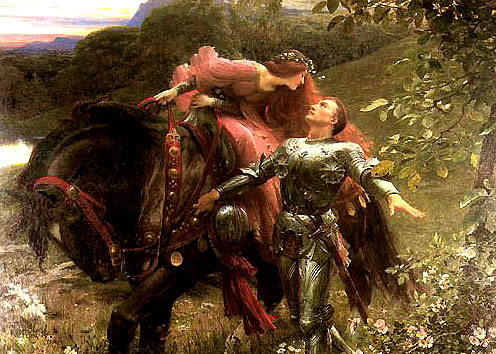
  • Journal: select two specific details from "La Belle..." and put them in your own words.
  • Continue with the Frost poem: review and then summarize the poem so far in notebooks.
  • Continue with poem.
  • Handed back critical lens essays.Students may rewrite essays for a better grade. Due next week.

Friday, November 18, 2011

Haudenosaunee Creation Story / "Two Tramps in Mud Time" by Robert Frost

Grade 12
  • Intro creation story unit. Creation stories represent the birth of a culture. They give hints to the development of cultural practice, belief, attitude and values.
  • Read the Haudenosaunee Creation Story; underline and annotate elements, archetypes, myth functions, motifs, etc.
  • Read the story aloud. Modify or add to annotations.
  • Discuss.
  • REMINDER: ESSAYS DUE MONDAY FOR PEER REVIEW. NOT IN EQUALS FIFTEEN POINTS OFF THE TOP!

Grade 10
  • Journal: Find two literary elements in "La Belle...", name them and discuss their relevance to the poem with specific details.
  • Start "Two Tramps n Mud Time" by Robert  Frost. read, annotate and discuss first three stanzas.

Thursday, November 17, 2011

A Bit of Poetry / La Belle Dam Sans Merci III

Grade 12
  • Reviewed yesterday's Jewkes essay; connected it to the theme of 'regaining lost innocence'
  • Read and discussed Wordsworth's "The World is Too Much with Us" as a group.
  • In peer groups, read "The Lake Isle of Innisfree" by W.B. Yeats. Annotated and discussed. Contrasted with the Wordsworth poem and analyzed the tone, imagery and meaning. Connect to the theme of the Jewkes essay.
Grade 10
  • Journal: describe a gloomy november day. Be as detailed as possible
  • Finish "La Belle..." (link to poem in Tuesday's post):
  • Read the reaminder of the poem as was done during the previous two lessons.
  • Discuss the meaning, imagery, etc.
  • Complete the story summary in notebooks.

Wednesday, November 16, 2011

Atonement With the Father, continued / La Belle Dam Sans Merci II

Grade 12
  • Directions for anlaysis paper due for peer review on Monday:
  • Mythology Analysis Paper
Select one of the myths studied (Theseus, Orpheus, Perseus) and analyze each story, in at least 500 words, as discussed in class in terms of metaphor and symbolism, the hero journey and personal meaning. For Theseus, and especially Perseus, particular attention should be paid to the concept of ‘atonement with the father.’
  • Read the introductory essay in Man the Myth-Maker by Prof. J.T. Jewkes in peer groups. Notes from the passage were taken and discussed when the reading was finished.
  • Large group discusson.
Grade 10
  • Journal: Recall something you would have done differently.
  • Continue with "La Bell..." from yesterday. Same routine with the next three stanzas then summarize the plot so far in notebooks.
  • No HW.

Tuesday, November 15, 2011

Perseus and Atonement With the Father / La Belle Dam Sans Merci

Grade 12
  • Review yesterdays discussion on the imagery of the myth of Perseus, especially in terms of 'atonement with the father.'
  • View the video
  • Tomorrow directions for a short paper will be given.
  • Collected group A journals today
Grade 10
  • Journals:
  • Period 6: write a personal or family story you would want your children to know.
  • Period 8: Reaction to image LINK
  • Intro the poem, La Belle Dam Sans Merci. Read the first three stanzas silently, identifying problematic vocabulary.
  • Define the words, annotate, read aloud and discuss the imagery.

Wednesday, November 09, 2011

Critical Lens / "Orpheus and Eurydice"

Grade 12
  • Viewed and discussed "Orpheus and Eurydice."
  • All rewrites are due no later than Monday.
  • Writing responses will be checked next week.
Grade 10
  • Continued working on critical lens essay.
  • Draft due on Monday
  • For lens quote, see Monday's entry HERE.

Tuesday, November 08, 2011

Theseus, The Sword under the Stone / Critical Lens Essay continued

Grade 12
  • Finished the passage from The King Must Die with the finding of the sword under the stone.
  • Viewed some mythic images of Stonehenge, the Uffington Horse, Avesbury Stone Circle.
  • HW Read the Story of Orpheus and write a response.
Grade 10
  • Continued planning the critical lens started yesterday. We may spend part of tomorrow working on this, and the first draft will be due on Monday.

Monday, November 07, 2011

Faulkner, Revisited / Silver Kiss Exam, Finale and Critical Lens Practice

Grade 12
  • Returned last weeks essays that were graded. Students are encouraged to get in any rewrites by Wednesday.
  • Went over the Faulkner passage from last weeks assessment. Worked in peer review teams on questions and went over as a class.
Grade 10
  • Finishing touches on Silver Kiss exams.
  • Reviewed elements of the critical lens essay. Students copied the following quote and began planning the first two paragraphs in their notebooks:
  • "The best literature is about the old universal truths, such as love,
    honor, pride, compassion, and sacrifice." (William Faulkner)
  • Students are able to work togehter in the planning stage for this essay. Planning for first two paragraphs should be done for tomorrow.
  • We will work on paragraphs three and four in class tomorrow, and the final copy will be handed in on Wednesday.

Wednesday, November 02, 2011

Theseus and Coming of Age / The Silver Kiss Exam I

Note: Tomorrow all classes will be taking state mandated state assessments.

Grade 12
  • Continued discussing the story of Theseus from Mary Renault's The King Must Die, chapter 2, in terms of imagery and functions of myth.
  • HW: Finish chapter 2, annotate and write response.
Grade 10
  • Silver Kiss exam, day 1. Exam will continue on Friday. Students are reminded to review the first 20 words of the vocabulary list.

Tuesday, November 01, 2011

Theseus and Coming of Age / The Silver Kiss X

Grade 12
  • Yesterday: intro chapter 2, then read 28 and 29. Respond in journals. Reread aloud to the class. Add to journal- discuss. HW was to read to bottom of page 33 and respond in in-class journals.
  • Today: discuss the significance of Theseus' moment in the sea and the harvest ritual on page 31.
  • Read through top of page 38 and respond.
  • HW: Read through top of 44 and rspond.
Grade 10
  • Journal: Analyze Language in chapter 15. How does the tone shift? What language, words, phrases demonstrate the shift.
  • What is the most important page in chapter 15? Why?
  • Discuss. What is the nature of the story’s ending? Did it have to end that way? Why
  • Note: Exam for the book will begin either tomorrow or Thursday depending on when the interim assessment is scheduled. Also, students are responsible for vocab words 1-20 for The Silver Kiss exam.
  • TOO MANY STUDENTS ARE NOT KEEPING UP WITH THE READING OF COMPLETING READING LOGS. PARENTS, PLEASE TAKE NOTICE. THE BOOK AND ALL READING LOGS SHOULD BE DONE.

Thursday, October 27, 2011

Peer Review / The Silver Kiss XIII

Grade 12
  • Peer review of final college app essay
  • For tomorrow: make sure The Horse God chapter is finished and annotated.
  • Final copy of essay due on Monday

Grade 10
  • Quiz 3 on chapters 9 through 12.
  • After quiz, continue reading.
  • Book and all reading logs should be done by Monday.
  • Exam scheduled for Wednesday

Wednesday, October 26, 2011

The King Horse III / The Silver Kiss XII

Grade 12
  • Started with an in-class journal entry on the application of the functions of myth so far in the story.
  • Discussed the the evolution of the functions of myth in society. Do they still operate? What has changed? Why?
  • Peer review on final college app essay tomorrow. Your choice of question or topic.

Grade 10
  •  Journal; On page 148, Simon asks himself if he’s doomed to be a shallow youth forever. Is he a shallow youth? Explain.
  • Discuss.
  • HW: Read chapter 14.

Tuesday, October 25, 2011

The King Horse II / The Silver Kiss XI

Grade 12
  • Yesterday: began reading chapter one of Mary Renault's The King Must Die for illustrations of the functions of myth.
  • Today: Continued reading. Discussed that myths "are for kids" and form the foundation of cultural initiation, and the image from the story of the "Navel Stone" as the axis mundi of Theseus' society.
  • HW: Read through page 113 with special attention to the horse sacrifice and Theseus' reaction to it. Be prepared to write about the story in class.
Grade 10
  • Yesterday: Read forst hapf of chapter 13 while reading logs were checked. Finish through page 162 plus log.
  • Today: Scan chapter 11. In journals, write about the significance of the character development and/or irony on page 138.
  • Discussed the importance of the conversation between Zoe and Simon, and what it says about their relationship.
  • HW: Finish chapter 13 plus log.

Friday, October 21, 2011

Theseus, continued / The Silver Kiss IX

Grade 12
  • Yesterday was peer review for essay number 5 (question 88).
  • Today the psychological/metaphorical significance of the story of Theseus and the Minotaur was discussed. We'll visit the story of Perseus on Monday
  • Final copies of essay 5 are due Monday.
  • Next essay (due for peer review next Thursday) will be on a topic of personal choice. It casn be one of the questions from the packet, from the Common Application or from a specific college application. This can be an essay being prepared for actual submission to a college.
  • Note: No rewrites of essays 1 through 5, including the Samuai essay, will be accepted after November 1st. 
Grade 10
  • Yesterday: Journal: What is irony is revealed in chapter 9? Discussed chapter 9.
  • Today: Journal: what are the plot elements leading up to Simon's change to a vampire?
  • Discussed most of chapter 10.
  • HW: Chapter 12 plus log.

Tuesday, October 18, 2011

The Legend of Theseus / The Silver Kiss VIII - Quiz Ch. 5-8


Grade 12
  • Distributed the Rules for Writing Dialogue. This sheet should be used for College App essay due for peer review on Thursday.
  • Reviewed the definitions of myth.
  • Read "The Legend of Theseus" with attention to symbolism and metaphor.
Grade 10
  • Quiz on chapters 5 through 8.
  • Finish reading chapter 10 and write reading log.
  • Chapter 11 will be read in class tomorrow. Reading logs will be checked by the end of the week.

Monday, October 17, 2011

Essay Writing Review / The Silver Kiss VII

Grade 12
  • Gave back Samurai essays to periods 1 and 5.
  • Went over how they should have been structured and detailed.
  • Rewrites are expected in amny cases....
  • Forgot to mention in class today, but Group 'A' journals due tomorrow! (Pd 1 and part of pd. 3.)
Grade 10
  • Journal: How is Zoe’s is a ‘dynamic’ character in chapter 7? Provide evidence from the chapter.
  • Discussed the journal entry and literary elements applicable to chapter 8.
  • HW: Chapter 10 to the last full paragraph on page 112 plus reading log.
  • Be familiar with vocabulary through number 20 by Friday.
  • Quiz on chapters 5 through 8 tomorrow.

Wednesday, October 12, 2011

The Last Samurai, essay III / The Silver Kiss VI

Grade 12
  • Last day in computer lab writing Samurai essay. Due on Friday!
  • College app question number 6 due tomorrow for peer review.
Grade 10
  • Quiz on chapters 1-4
  • Begin reading chapter 7. Finish for hw plur reading log.

Tuesday, October 11, 2011

The Last Samurai, essay II / The Silver Kiss V

Grade 12
  • In the lab to continue essay
  • Samurai essay due Friday.
  • Next college app essay due for peer review Thursday.
Grade 10
  • Checked reading logs today.
  • Discussed chapter four in terms of literary elements
  • HW: Chapter 6 plus log

Friday, October 07, 2011

The Last Samurai, essay I / The Silver Kiss IV

Grade 12
  • Day 1 in computer lab working on essay. I've added a day, so we'll be in the lab on Tuesday and Wednesday.
  • College app essay #6 (.First experiences can be defining. Cite a first experience that you have had and explain its impact on you. (University of Pennsylvania))
     will be peer reviewed on Thursday, final copy due Monday 10/17
  • Group B journals remain due on Tuesday.
Grade 10
  • Journal: Discuss the intraction between Zoe and simon at the end of chapter 3.
  • Discuss.
  • Discuss the three scenes of chapter three in terms of character development, symbolism, conflict, developing theme.
  • HW: Chapters 4 and 5 and reading logs.
  • Note: Reading logs will not be checked every day but could be checked at any time.

Thursday, October 06, 2011

The Last Samurai, conclusion/ The Silver Kiss III

Grade 12
  • Distributed essay question for movie (see below)
  • Finished movie, discussed conclusion
  • Next college app essay is question 6: First experiences can be defining. Cite a first experience that you have had and explain its impact on you. (University of Pennsylvania)
  • Due Wednesday for peer review. Final copy due 10/14 (Fri.)
  • Tomorrow and Tuesday in computer lab (Mr. G's room) working essay for movie.
  • Tuesday, Groub 'B' journals due on Tuesday
  • Samurai essay:


“The journey the hero gets is the one he’s ready for.” ~Joseph Campbell

“The hero journey is a going out and a returning. It’s a cycle.” ~Joseph Campbell


“The hero quest does not involve simply the hero’s discovery of some boon or Holy Grail, however; it also involves finding him or herself, which ultimately means finding a home in the universe.” ~ Susan Mackey-Kallis

“They say Japan was made by a sword. They say the old gods dipped a coral blade into the ocean, and when they pulled it out four perfect drops fell back into the sea, and those drops became the islands of Japan. I say, Japan was made by a handful of brave men. Warriors, willing to give their lives for what seems to have become a forgotten word: honor.” ~Simon Graham (from the movie).

Joseph Campbell says there are two types of hero: the psycho-spiritual and the physical. The Last Samurai is an archetypal story of the hero in both aspects. Indeed, Nathan Algren cannot complete the physical hero journey until he completes the other. Nathan’s psycho-spiritual transformation required a journey into the unknown, where he was subject to the functions of myth of traditional Japanese culture.


In a well written essay containing specific details from the story, explain Nathan’s hero journey in terms of the stages of the hero journey and the four functions of myth.


Remember that the hero journey is not linear, is not a rigid formula. This will be an explanation of Nathan’s transformation. Consider the importance of ‘gifts’ and the concept of ‘atonement with the father,’ in your treatment of this subject.

Characters:

Katsumoto
Nathan Algren
Sergeant Gant
Colonel Bagley
Omura
Simon Graham: translator, photographer
General Hasegawa: committed suicide with Katsumoto’s assistance
Ujio: Nathan’s adversary/foil
Taka
Taka’s sons
Nobutada: Katsumoto’s son
Emperor Meiji


Grade 10
  • Journal: What is revealed about Christopher in chapter 2?
  • Check Reading Logs for grade
  • Discuss journal entry, and chapter 2
  • (Note: Too many did NOT do last night's hw. Students who did were allowed to begin tonights, everyone else had finish what was due today.)
  • HW: Chapter 3 plus reading log.

Wednesday, October 05, 2011

The Last Samurai, continued / The Silver Kiss II

Grade 12
  • Showed classes the essay question. Everyone will get a copy of it tomorrow, depending on the health of the copy machine.
  • Discussed the story in terms of the functions of myth and steps of the hero journey
  • Continued movie to around 2:00:00
  • Willl finish tomorrow, sum up, and begin planning essay.
  • Note: Anyone who missed part of the movie should arrange viewing that part with me or at home!
Grade 10
  • Journal: How does the author reveal Zoe's character in chapter 1?
  • Discuss.
  • Finished chapter 1, discussed imagery.
  • Students copied a model reading log. (see below) Each log should follow this format: Date, page numbers, chapter number and come up with a suitable title. Then a brief summary and a discussion of one or more literary elements.
  • HW: Read chapter 2 and write a reading log. Will be checked for a major grade.
  • Book Log Model

  • The Silver Kiss by Annette Klause
    10/5    Chapter 1    Pg. 1-12    “Alone”
    Summary:

    Zoë’s Mom may be dying from cancer, her father has become distant, her best friend is moving. She’s alone, frustrated, hurt, and angry. Her friends don’t know how to deal with her, she isn’t allowed to spend time with her mother. She sits in the park at night, sees a boy whose beauty breaks through her defenses and she cries.
    Literary Elements:

    The mood is lonely and sad. This is revealed in the very first sentence: “The house was empty.” Death, abandonment and isolation seem to be developing motifs. Zoë is very depressed. She sleeps a lot and doesn’t eat enough. She may feel abandoned by her father while her mother is sick.

    Zoe is contrasted with her mother in the chapter. While they have a similar appearance, her mom is an artist whose work is vibrant and alive, while Zoe is a poet whose work is dark and thoughtful.
    Imagery is used effectively. Author’s language is very descriptive.

Tuesday, October 04, 2011

The Last Samurai, continued / The Silver Kiss I

Grade 12
  • Continued The Last Samurai to 1:41:00
  • Discussed the contiued transformation of the main character and the application of the steps of the hero journey

Grade 10
  • Introduced The Silver Kiss by Annette Curtis Klause
  • Discussed requirements for reading logs and importance of keeping up and completing them
  • read most of chapter 1 to the class, discussing literary elements: mood, character development, motif
  • Will finish chapter 1 tomorrow and complete a reading log togehter as a model.

Friday, September 30, 2011

The Last Samurai II / Critial Lens Essay Practice, continued

Grade 12
  • Continued movie to 49:30
  • Discussion followed.
  • Reminder: Group 'A' journals due on Tuesday.

Grade 10
  • Pd 5: Finished first body paragraph of critical lens essay begun yesterday. The, in groups, worked on another quote and introduction.
  • Pd 8: Finished first body paragraph of critical lens essay begun yesterday. Class was shortened due to Pep Rally.
  • Next week we will continue critical lens essay prep, but will also begin our first novel of the year.

Thursday, September 29, 2011

The Last Samurai I / Critial Lens Essay Practice, continued

Grade 12
  • Collected essays.
  • Reviewed the four functions of myth: sociological, pedagogical, cosmological, and metaphysical.
  • Introduced the story and the characters.
  • Viewed movie to 23:00
  • Discussed functions of myth illustrated so far, and steps of the hero journey covered.

Grade 10
  • Journal: Pd. 6: write about an early memory. Pd.8: Write about a memory from middle school
  • Continued Critical Lens Essay practice. Interpreted a quote, chose stories that applied, wrote the introductory paragraph and started the first body paragraph.
  • Handout: Literary elements:

Antagonist: Counterpart to the main character and source of a story’s main conflict. The person may not be “bad” or “evil” by any conventional moral standard, but he/she opposes the protagonist in a significant way.

Climax: The turning point in a story, at which the end result becomes inevitable, usually where something suddenly goes terribly wrong; the “dramatic high point” of a story.

Conflict: A struggle between opposing forces which is the driving force of a story. The outcome of any story provides a resolution of the conflict(s); this is what keeps the reader reading. Conflicts can exist between individual characters, between groups of characters, between a character and society, etc., and can also be purely abstract (conflicting ideas).

Mood / Tone: Mood is the atmosphere or emotional condition created by the piece, within the setting. The mood is conveyed in part through the author’s tone. Tone is the apparent emotional state, or “attitude,” of the speaker / narrator / narrative voice, as conveyed through the language of the piece.

Plot: Sequence of events in a story. Most literary essay tasks will instruct the writer to “avoid plot summary;” the term is therefore rarely useful for response or critical analysis. When discussing plot, it is generally more useful to consider its structure, rather than simply “what happens.”

Point-of-view: The identity of the narrative voice; the person or entity through whom the reader experiences the story. May be third-person (no narrator; omniscient or limited) or first-person (narrated by a character in the story). Point-of-view is a commonly misused term; it does not refer to the author’s (or characters’) feelings, opinions, perspectives, biases, etc. Remember the car crash: the first person on the scene says, "I saw it, I was there." The second person is given directions: "You, call 911 and go get help" (second person voice is rarely found in literature). The third person to get to the accident scene says, "That guy over there saw the crash. He said that the car came from that direction..."

Protagonist: The main character in a story, the one with whom the reader is meant to identify. The person is not necessarily “good” by any conventional moral standard, but he/she is the person in whose plight the reader is most invested.

Setting: The time and place where a story occurs. The setting can be specific (e.g., New York City in 1930) or ambiguous (e.g., a large urban city during economic hard times). Also refers directly to a description thereof.

Theme: The main idea or message conveyed by the piece. A theme is generally stated as a complete sentence; an idea expressed as a single word or fragmentary phrase is a motif.

Allegory: Where every aspect of a story is representative, usually symbolic, of something else, usually a larger abstract concept or important historical/geopolitical event – such as Animal Farm.

Alliteration: The repetition of the same sounds or of the same kinds of sounds at the beginning of words or in stressed syllables, as in “on scrolls of silver snowy sentences”

Allusion: A reference to something supposed to be known, but not explicitly mentioned. In “Throwing the Racetrack Cats at Saratoga” (the one we read in class), the mention of Herod is an allusion because it refers to something outside of the poem.

Characterization: The author’s means of conveying to the reader a character’s personality, life history, values, physical attributes, etc. Also refers directly to a description thereof.

Foreshadowing: Where future events in a story, or perhaps the outcome, are suggested by the author before they happen.

Imagery: Language which describes something in detail, using words to substitute for and create sensory stimulation, including visual imagery and sound imagery. Also refers to specific and recurring types of images, such as food imagery and nature imagery.

Metaphor: More than a simple comparison - a metaphor relates one thing as being another. If someone says, “My friend is a real pit bull,” they likely mean that he is aggressive, intense, violent – as opposed to short and dog-like.

Motif: A recurring important idea or image. A motif differs from a theme in that it can be expressed as a single word or fragmentary phrase, while a theme usually must be expressed as a complete sentence.

Personification: Where inanimate objects or abstract concepts are seemingly endowed with human self-awareness; where human thoughts, actions and perceptions are directly attributed to inanimate objects or abstract ideas.

Simile: An indirect relationship where one thing or idea is expressed as being similar to another – often using “like” or “as.”

Structure: The manner in which the various elements of a story are assembled (may also be considered a literary element).

Symbolism: The use of specific objects or images to represent abstract ideas.

Wednesday, September 28, 2011

"Just Drawn That Way" / Short Story Exam

Grade 12
  • Reviewed steps to the hero journey.
  • Read "Just Drawn That Way" by Michael Arthur. Students indicate steps on the hero journey in the story, then discuss their findings with their peer review teams. When done, share findings with whole group.
  • Final copy of question #27 due tomorrow.
Grade 10
  • Short Story Exam I
  • Tomorrow, continue intro to the critical lens essay

Monday, September 26, 2011

POM Review / Critical Lens Intro

Grade 12
  • Review College App Essay objectives for both content and mechanics. Essays need to demonstrate positive, personal growth! Simple mechanical errors need to be caught in peer review!
  • Journal: personal reflection on The Power of Myth
  • Group discussion.
  • Tomorrow: peer review for essay #3.
  • B group journals due.

Grade 10
  • Journal: open topic (5 minutes)
  • Intro the Critical Lens Essay.
  • Distribute essay format.
  • Discuss interpreting quotes.
  • Give examples.
  • Short story exam on Wednesday!

Friday, September 23, 2011

POM V / "The Open Window" Video

Grade 12
  • Finish the video.
  • Discuss.
  • In class journals: Process the information from the video.What are your thoughts and reactions? What resonated? (Aha! moments?) How does it relate to you?
  • Will share in peer review groups on Monday.
Grade 10
  • Check HW ("Open Window" outline.
  • Those without, do in hallway.
  • Those who did, watch video.
  • Discuss Vera's character.
  • Discuss outline.
Grade 9

Thursday, September 22, 2011

POM IV / "The Open Window" by Saki

Grade 12
  • Note: I neglected to give pds 1 and 3 the next essay question! #27 in your essay handout: "You have just completed your 300-page autobiography. Please submit page 217." (University of Pennsylvania) Draft due next Tuesday for peer review.
  • Collected essay #2.
  • Discussed college app essay sample submitted to Wellesley
  • Discussed The Second Deadly Sin of Writing: Incorrect punctuation of two independent clauses.
  • POM to 43:30. Slaying your dragon and following your bliss.
Grade 10
  • Homework completion was something of an issue today, so....
  • Classes were directed to read "The Open Window" and annotate for character development (last nights HW). Those who had the homework done started on tonight's HW.
  • In pencil, complete the outline for "The Open Window."

Wednesday, September 21, 2011

Journal Feedback - POM / Masque Wrap-Up

Grade 12

Journal items:
  • Time your entries! I know you can write more than one sentence per minute! A full five minutes of writing should cover most of a page at least.
  • Practice strengthening standard writing conventions. Facebook writing cannot bleed through into your journals.
  • Variety! Don't stick to one topic. Write about what is important to you.
  • If you want me to read your journal and give you feedback, it must be handed in on time. Essays are due tomorrow. I won't have the timne to read late journals. I will scan them for effort, grade accordingly and deduct late points.
  • Power of Myth III
  • Continued the video and ended at 34:00
  • Essays due tomorrow!
Grade 10
  • In groups: go over last nights HW (Masque outline), revise and refine.
  • Full class review.
  • HW: Read "The Open Window" by Saki. Annotate, focusing on character development.

Tuesday, September 20, 2011

Peer Review / "Masque"Finale

Grade 12
  • Handouts: 100 college application questions; college search; The Seven Deadly Sins of Writing
  • Emphasized the need for students to use the 5 days between the essay assignment and peer review for constructing the best draft possible. Especially as there are only 2 days for writing the final copy. Time management and discipline!
  • Collected journals from pd 1 and pd 3 through "L" on the class list.
  • Peer review on essay #2 (quest. 29 in the above packet)
  • Final copy due Thursday.

Grade 10
  • Journal: What do the rooms in the story represent?
  • Finish reading the story. Discuss the symbolism of the mysterious figure, the climax and the
    dénouement.
  • HW: In notebook and in pencil, complete the outline of the story to the best of you ability. We'll go over it in teams tomorrow, and as a class.

Monday, September 19, 2011

Grammar Fun! and Power of Myth Part II / "The Masque of the Red Death" Part II

Grade 12
  • Discussed my observations of the first essay. Went over common errors, especially those that should have been picked up during peer review and revision.Continued with Power of Myth to 23:00. significant quote: "The adventure that the hero gets is the one he's ready for."
  • Essay #2 is due tomorrow for peer review.
  • Journals for period 1 and 3A are due tomorrow.

Grade 10
  • Journal: What is important to you? Why?
  • Review friday's reading of "Masque".
  • Discuss, as an example, how the word "east" could be used symbolically/metaphorically. East >direction > sunrise > new beginning > new life > birth. East = birth
  • Continue reading and explaining the story. Finished the last complete paragraph on pg. 175. Discussed the layout and appearance of the rooms, the significance of the seventh or western room and the clock.
  • HW: read and annotate through the last full paragraph on page 176.

Friday, September 16, 2011

The Power of Myth / Intro to "The Masque of the Red Death" by Edgar Allen Poe

Grade 12
  • Read example college app essay accepted by Cornel University, discussed elements that make it a successful essay: humor, novel theme, clear and concise sentence structure and expression.
  • Began viewing, and taking notes from, episode 1 of  "Joseph Campbell and The Power of Myth; The Hero's Adventure." Discuss as needed.
  • Reminder: group A journals due on Tuesday.
  • Practice college app essay #2 due Tuesday.
Grade 10
  • Journal: Write about a time when you were frightened. Describe it in detail.
  • Finish outline for "Soft Rains."
  • Intro "The Masque of the Red Death." Read and annotate the first two paragraphs focusing on tone and setting.
  • HW: Study first 8 vocabulary words.

Thursday, September 15, 2011

The Hero's Journey / "Soft Rains", Continued

Grade 12
  • Collected essays.
  • Read and discussed sample college app essay accepted by Harvard.
  • A work of advice: Coming up with an imaginative title will bait the hook for the reader. Consider doing this.
  • Continued Mythology slideshow, focusing on The Hero's Journey.
  • Discussion included the application of the story of the hero, psychologically, to one's own life.
  • Assigned question for essay # 2, due Tuesday for peer review.
  • What do you think people who know you would be surprised to learn about you? Limit your response to two pages, double spaced.(Rice University)

Grade 10
  • Journal: What is the theme of "There Will Come Soft Rains?" Define it in a thesis statement and prove it. (Try main idea if thesis is too difficult.)
  • Discuss.
  • Hand back essays.
  • Begin outlining "Soft Rains" together.
  • HW: Preview "The Masque of the Red Death" by Edgar Allen Poe.
  • Vocab: Become familiar with words 1 through 6 be Monday.

Wednesday, September 14, 2011

Intro to Mythology / "There Will Come Soft Rains," continued

Grade 12
  • Read sample college application essay from the University of Chicago.
  • Intro to Mythology; begin slideshow. Take notes
  • Pd 1, up to slide 12
  • Pd 3, up to slide 11
  • Pd 5, up to slide 9
  • The slideshow is available to students in my folder in the student directory.

Grade 10
  • Finish reading and annotating "Soft Rains."
  • Journal: What is the most disturbing image in the story? Why is it disturbing? What part does it play in the story?
  • Begin discussion of story with journal answers as spring board.

Technology Guidelines/ Peer Review / "There Will Come Soft Rains"

This is Tuesday's (9/13) update. I was quite sure I finished and posted it, but this is what  happens on a sleep deprived Tuesday after a late Open House Monday.

When I taught Computer Literacy for SUNY Plattsburg, I warned my students about the dependability of computer technology. Don't trust it. Everyone knows Murphy's Law: Anything That Can Go Wrong, Will Go Wrong.

Well, with computers, we need to add another Law: "Anything That Can't Go Wrong, Will Find Some Way Of Going Wrong."

Please follow the following technology guidelines for my classes:
  • Do NOT email me your work. Being responsible for my work is more than enough.
  • If your printer fails you, email your work to a friend to print out for you. You all have friends.
  • If necessary, email your work to yourself as an attached file. Open the file at school and print it out  before class starts.
  • If absolutely necessary, bring the file on a thumb drive, early in the morning, and ask a teacher for help getting it printed. Student profiles do not have access to the USB ports. This is a last resort only.
  • Back up your files! This cannot be emphasized strongly enough. The Computer God is all rules and no mercy and He will smite you. Save your files to a removable disc.
  • While working, save constantly!
  • Make sure the programs you use are compatible with the school's programs. If you don't have MS Office at home, you can very often save files in an Office format: File Menu > Save as > Save as Type > Select appropriate program from the pull down menu.
Grade 12
  • Went over technology guidelines.
  • Reviewed peer review process: read mindfully for careless errors, grammar and mechanics issues. Also note positives, where imagery is done well, etc.
  • Final copy due Thursday.
Grade 10
  • Journal: Who has had the greatest impact on you and why?
  • Collected theme/tone essays.
  • Discuss journals.
  • Intro "There Will Come Soft Rains" by Ray Bradbury.
  • Since short story packets have not arrived yet, we will be reading out of the anthology and annotating in notebooks.

Monday, September 12, 2011

Lying, Cheating and Stealing / "The Last Unicorns" by Edward Hoch

Grade 12
  • Handout: "Students Lie, Cheat and Steal..." by David Cary. Read, and responded in in-class journals.
  • Discuss
  • Encourage class participation. Instructors will only know who you are if you participate in class! Come up with at least one thing to contribute in each class. Don't be passive learners.
  • Returned letter responses (except for period 5). Discussed observations.
  • Assigned peer review teams (except for period 5), discussed directions for peer review process.
  • First essay due tomorrow for peer review!
Grade 10
  • Journal: Select one moment from the weekend and describe it in as much detail as possible. (A moment is no more than a few seconds.)
  • Collect HW.
  • Continue reading "The Last Unicorns." Annotate and discuss.
  • Complete outline together to be used as a model.

Friday, September 09, 2011

"Fertile Ground" / Themes and Tones Continued

Grade 12
  • Read and discussed a piece written by myself titled "Fertile Ground" about a visit to Ground Zero two years after 9/11 in terms of the qualities that make a successful college application essay. (Note: The link brings you to the text of the essay. At the bottom is a link to a video of Harry Roland. I'm not sure if the link still works but give it a shot if you're interested.)
  •  Discussed aspects of the college application process:
  • When visiting schools, sign in. Leave evidence of your interest in the institution. Send a thank you letter if you take a tour.
  • You do not know if your family can afford a private college or university until you have completed the financial aid process. Many private institutions have healthy endowments and offer very generous financial aid packages to families.
  • Start becoming familiar with The Common Application website. Make sure you use Internet Explorer when working on this website.
  • Other useful website in your college search:
  • The College Board: ("The College Board is driven by a single goal — to ensure that every student has the opportunity to prepare for, enroll in and graduate from college.")
  • College Confidential Questbridge Programs: ("QuestBridge is a non-profit program that links bright, motivated low-income students with educational and scholarship opportunities at some of the nation's best colleges. QuestBridge is the provider of the National College Match Program and the College Prep Scholarship.")
  • College Confidential: ("Here you'll find hundreds of pages of articles about choosing a college, getting into the college you want, how to pay for it, and much more. You'll also find the Web's busiest discussion community related to college admissions, and our CampusVibe section!")
  • U.S. News and World Report: One of the best sites for information on college rankings and other information.
  • A+ Options for B Students: Part of the previous website.
  • Reminder: First essay due Tuesday.
Grade 10
  • Journal: Choose a story you are familiar with (movie, book, TV show, etc.) and discuss the theme and tone of that story. Share and discuss.
  • Handout Literature Quick Review Sheet:
Title:


Author:

I. The “Big Four”

A. Characters:

B. Theme:

C. Plot:

D. Setting:

II. Plot Breakdown

A. Motivation:

B. Conflict:

C. Complication:

D. Suspense:

E. Climax:

F. Dénouement:

III. Analytical Elements

A. POV:

B. Other Literary Elements (allusion, symbolism, irony, etc.) :

  • Begin reading "The Last Unicorn" by Edward Hoch. Read for setting, tone, mood. Annotate.
  • Finished the first two paragraphs.
  • HW: Theme and tone assignment. See yesterday's post.

Thursday, September 08, 2011

The Loss of Innocence / You Life is a Story

Grade 12
  • Portfolio information was handed out:
1) General
a) Appearance
i) Neatly bound to the best of your ability and imagination
ii) Cover should be sturdy
iii) Titled
iv) Designed in a manner indicative of who you are
v) All pages typed unless otherwise directed
b) Table of contents
i) Separated by units/sections.
2) Sections
a) First Semester
i) Signed contracts
ii) Intro Letter Response
iii) College applications
(1) All graded drafts, final on top
iv) Reflection journals
(1) At least 5 per marking period, dated, titled

  • Students received class contracts to be signed and shown to me tomorrow
  • Discussed 'voice' in writing. Identified examples of voice in my letter.
  • Discussed journal expectations: Journals are for exploring yourself and being aware of the quality of your own writing.
  • Read essay on innocence by Prof. W.T. Jewekes from his book, Man the Myth-Maker.
  • First essay, 300-400 words relating to the above reading: When were you no longer a child? First draft due Tuesday, 9/13. Typed and printed according to directions. Lines need to be numbered (every 5 would do the trick) for peer review. Note: Your peers are going to read this. Decide carefully how personal this piece is going to be.
  • Journal Dates:
  • Group 'A' (1st period and 3rd period students 'A' through 'L') due 9/20
  • Group 'B' (3rd period 'M' through 'Y' and 5th period) due 9/27
  • Minimum of 7 journal entries, each at least 5 full minutes of writing.
Grade 10
  • Checked yesterday's journal entry.
  • Journal: if you life is a story, what is the title and why?
  • Introduce 60 second edit.
  • Handouts: class contracts. We read and discussed them, students signed them. They are to be signed by parents and returned tomorrow.
  • Directions for first writing assignment handed out and explained:
  • 1) Title 2) Introduction
    a) Define the tone and theme of your life right now as a thesis statement. Discuss in general terms.
    3) Discuss your theme and supporting details. What is the theme of your life right now? Why? Themes may center around a conflict (you against _________.), desire (I want _________, but __________ is in the way.), good fortune, friendship, family, etc. If you have difficulty finding a theme, please see me for guidance. The title you’ve chosen should refer to this theme.
    4) Discuss the main ‘tone’ in your life right now.. What is the primary feeling in your story? Why? Give examples. Describe particular events that represent the tone, and your feelings about it.
    5) Conclusions: Did you learn anything from this exercise?
    OR
    6) Write an actual narrative... the story of this stage of your life.
    a) You may center the story around one single event, written in story form.
    i) Think plot, setting, conflict.
    7) Use language that will imply the tone. Again, think of a title that will point you in the direction of a theme... but don't state the theme directly until the end of the story. Write this from either the first or third person point of view.
  • Due Monday, 9/12

Wednesday, September 07, 2011

Welcome Back!

Check here for class and home work, comments, suggestions, hints. Click the "Like" button above to subscribe to the class Facebook page. You can ask me questions there and I can haunt you about deadlines. ;-)

Hopefully my xeroxing will be in tomorrow so we can catch up with handouts.

Remember... It's almost June.

Cheers,
Mr. Lambert

Grade 12
  • Due tomorrow: response to my intro letter.
  • You need: a multi-subject notebook (class notes, class journal, miscelleanous)
  • A separate personal journal. You will be required to complete at least 7 journal entries, each to be a minimum of 5 minutes of writing. Journals will be collected every two weeks.
  • Portfolio: directions will be given out tomorrow. Your portfolio will be due some time in May and will be 1/3 of your final exam grade. Just about everything you do in this course will be included, so you NEED to plan a strategy for maintaining and organizing your work now.

Grade 10
  • Materials required: multi-subject notebook, folder(s)
  • Discussed importance of getting work done on time and staying organized.
  • Vocab:
1. Theme: a unifying idea that is a repeating element in literary or artistic work
Ex: “Never give up.” “Accept what can’t be avoided.” “The need of the one outweighs the need of the many.”
2. Tone: shows the author’s attitudes toward the subject and toward the audience. Tone may be formal, informal, intimate, solemn, sad, playful, serious, ironic, condescending, or many other possible attitudes.
3. Mood: the emotions that you feel while you are reading.

  • 5 minute in class journal activity: if your life is a story, what, currently, is the theme and tone of the story. finish for HW.

Sunday, June 12, 2011

Mr. Lambert's Bad...

Seniors: Your final is on Monday (that's tomorrow) not Tuesday as posted below. Same time (8:30) Same place (702).

Wednesday, June 08, 2011

Two Class Days to Go!

Grade 12
  • Final Exam: the personal essay
  • Final Exam Change of Location! Report to room 702!
Grade 10
  • Finished Catcher discussion.
  • All reading logs need to be checked by the end of the day tomorrow.
Grade 9
  • Watched Act 5 of R&J
  • Start review tomorrow.

Tuesday, June 07, 2011

Stay Cool...

Make-up date for final exam for everybody is 6/15 at 8:00 in my room.

Grade 12
  • Monty Python and the Holy Grail!
  • Personal essay will be written tomorrow and Thursday.
  • Final exam: Tuesday, June 14th at 8:30 in the LGI. (Be there at 8:15.)
Grade 10
  • Discussed the importance of Holden's meeting with Phoebe and Mr. Antolini.
  • HW: Finish the book and all reading logs!
  • Final exam: Monday, June 13th at 12:30 in the Cafe. (Be there at 12:15.)
Grade 9
  • Finished reading the play.
  • Will view the act tomorrow.
  • Finish all notes for grading.
  • Final exam: Tuesday, June 14th at 8:30 in Cafe. (Be there at 8:15.)

Monday, June 06, 2011

The Last Monday of Classes

Grade 12
  • In groups: discuss the themes of this story, prepare notes for final essay
  • Begin: Monty Python and the Holy Grail.
  • Due to the sound reasoning of period 8, the in-class personal essay will be given, Wednesday and Thursday instead of Thursday and Friday.
  • Pd 4 & 8! Books obtained from BOCES have to be returned! Get them back to me TOMORROW!
Grade 10
  • Read chapter 23 in class.
  • Checked reading logs through chapter 22.
  • Finish chapter 24 for HW.

Grade 9
  • Watched Act 4. read Act 5, scenes one and two.
  • HWRead scene 3 to the top of page 243.

Friday, June 03, 2011

Five More Classes to Go! Push!

Grade 12
  • Read chapter 23 in class.
  • HW: Finish chapter 24 + log.
Grade 10
  • Pd 1: Journal: What is the connection between Holden's visit to the duck pond and his memory of visiting Alie's grave?
  • Pd. 5: Not enough students are caught up. Silent reading period. Everyone is to be caught up by Monday.
  • HW: Chapter 21 and 22 and reading logs.

Grade 9
  • Finish notes for Act 4.
  • Will watch the video on Monday.

Thursday, June 02, 2011

Fly By...

Grade 12
  • HW: Chapter 22

Grade 10
  • Discussed chapter 17 and Holden's outburst with Sally.
  • Checked reading logs through chapter 18.
  • HW: Ch. 20
Grade 9
  • HW: Act 4, scene 2, 3.

Wednesday, June 01, 2011

I Told You It Was Almost June....

Grade 12
  • Discussed chapter 20, especially the Wart's Christ-like desire at the end of the chapter and the nature of Kay's knighthood ritual.
  • HW: Ch. 21

Grade 10
  • Discussed chapters 15-16 with special attention to Holden's attitude toward the museum and the boy walking along the curb. Handed out copy of Burns' "Comin' Through the Rye."
  • HW: Chapters 18 and 19.
  • Final Exam:
Grade 9
  • Finished video for Act 3.
  • HW: Act 4, Scene 1.