Email me!

Monday, March 08, 2010

Hamlet II / Benchmark Exam Continued - Lord of the Flies

College Prep 12
  • Discussed quality of unit exams. Due to the careless nature of too many of them, essay rewrites will require a conference with me first.
  • Read Hamlet through line 94, Act 1, Scene 3. (Text with translation can be found HERE. The first link is used because it provides line numbers.)
  • I will be out tomorrow. Students are to write in their reflection journals. 4 more need to be completed by next Monday for a total of 10 since the last grade assigned.
Grade 10
  • Students edited Friday's benchmark.
  • The Lord of the Flies by William Golding, was distributed. Chapter 1 should be read by Wednesday.
  • Tomorrow they will take the poetry exam with the subsitute.
  • Poetry essay due on Friday.

Sunday, March 07, 2010

Mr L's Response to President Obama

 For context, read this article from the NY Times:

School’s Shake-Up Is Embraced by the President


Dear Mr. President,

If the best of us aren't safe, why should any of us become teachers? I was at work until six o'clock on Friday. Yesterday, Saturday, I graded essays for three hours. I'll do the same today. I worked a six day week this week. I do that often. I research and plan for much of the summer. I am not compensated for that. I also work in a district with significant social problems. Too many of our students don't do well. Your endorsement of the Central Falls, RI nuclear option is not only profoundly wrong for public schools in general... it threatens my family. Right now, smart people should avoid the profession. The Democratic Party has lost my membership and you have lost my vote.

While I agree teachers should be held accountable, to do so without holding anyone else accountable is nothing more than political scapegoating. All the electorate hears right now is that teachers are the problem.

How politically expedient.

Sincerely,
Michael Lambert

Friday, March 05, 2010

Hamlet I / Benchmark

College Prep 12
  • Read Hamlet through line 89, Act 1, Scene 2. (Text with translation can be found HERE. The first link is used because it provides line numbers.)
  • Class routine for Hamlet is as follows: Come in, grab a book. Preview annotations/footnotes for first few minutes to prep for the day's reading. After each scene, write summary/notes in notebook. Ask questions.
  • If anyone is absent, the link to the text and the class' progress will be posted here.
Grade 10
  • Benchmark exam

Thursday, March 04, 2010

Hamlet Intro / Shakepseare's Sonnet

Haven't updated this site in a while due to a stacked inbox of papers and essays. Will try to post assignments, at least, in the coming days. All classes are reminded that interim reports go out next week.

College Prep 12
  • Finished watching Paolini's Oedipus Rex yesterday. Discussed the psycho-social (Freud/Jung) implications of the story.
  • Introduced Hamlet today. This link provides access to the text with numbered lines. Daily progress will be posted here so that absent students can keep up.
  • Read a brief introduction and wrote down focus questions: What is the purpose of King Hamlet's ghost? Did Hamlet really go mad? Was he acting? Was Gertrude faithful to Hamlet's father? Was she complicit in his murder? Why did Hamlet wait so long to prove his uncle's guilt? Why didn't he act when he was convinced?
  • Will begin reading tomorrow. Four more journal entries are due by Monday, for a total of six so far in the curent block.
Grade 10
  • Read and discussed Shakespeare's SONNET 18
  • Tomorrow: Benchmark #2
  • Monday: Poetry exam.

Tuesday, February 23, 2010

Oedipus / "Wreck of the Hesperus" - Benchmark Prep

College Prep 12
  • Yesterday Oedipus was brielfy discussed. Students took most of the period to reread and annotate. Annotations will be collected as part of the essay grade for this unit. (For link to oedipus, see link in 2/19 post.)
  • Today we began watching Pasolini's Oedipus Rex, with particular attention to the filmaker's symbolism.
  • Yesterday, the essay question: In a discussion including at least two of the five stories, analyze similarities and differences in event sequence, characterization, symbolism and theme. Be sure to tie these elements together in such a manner that supports each story’s purpose or message. (Think in terms of the hero journey and ‘atonement with the father’ in particular.)
  • Also told period 7 that anyone who wishes can write on their own topic within the context of the five stories (and movie) in this unit. Due date will be extended to next Wednesday.
Grade 10
  • Checked homework: annotation of Lonfellow's "Wreck of the Hesperus." Annotations should include literary elements such as foreshadowing, irony, personification, metaphor, simile, characterization and identification of words and phrases that indicate mood and tone.
  • Today began work prepping for next week's benchmark. Passage and graph need to be annotated and multiple choice questions answered.

Friday, February 19, 2010

"The Three Ravens" / "Danny Deever" - Critical Analysis Model, continued

College Prep 12
  • Review "The Three Ravens" (viewed yesterday, based on "The Six Swans")
  • Notes: sequence of events, symbolism, theme
  • HW: Read "Oedipus" handout.
Grade 10
  • Check HW.
  • Review method for constructing a critical analysis of poetry.
  • Begin conclusion.

Wednesday, February 17, 2010

Story Analyses / "Danny Deever" - Critical Analysis Model II

College Prep 12
  • Reminder about mindful sentence construction. Reading work out loud will make mistakes stand out and show where your writing weaknesses are.
  • Continued working in groups listing main events, symbols and their meanings.
  • Group rep reports to class. Question and comment.
  • Reminder #2: Eden essays dus on Friday.
  • Reflection journals will be checked tomorrow.
Grade 10
  • Check homework. Students to annotate poem by quatrain. Annotations should answer two questions: What is going on? What is the author doing?
  • Share homework.
  • Write second paragraph, add to model:
   The first stanza introduces foreshadowing and suspense (lines 3,4) through the conversation between CS and FP. CS is “white” with “dread” about “what (he’s) got to watch.” The cause of the dread is introduced: Danny Deever is getting hanged. Kipling emphasizes the tone by repeating “hangin’” three times (lines 5-8).
  • HW: write the next two paragraphs on seperate paper to hand in. Students were told to vary how they start the succeeding paragraphs. The following example was given for them to use: "The reaction of the regiment is illustrated in the second stanza."

Tuesday, February 16, 2010

The Garden Revisited-Story Analysis / "Danny Deever" - Critical Analysis Model

College Prep 12
  • The Garden of Eden assignment was "rebooted." Most students did not personalize the story as directed: The story is your dream. Work the imagery and symbolism and write a critical analysis the conclusion of which will be something that is personally meaningful.
  • Shared a web link that contains a good explanation of Campbell's "Monomyth" and hero cycle. The section "Atonement with the Father" was distributed in class and discussed. This is a major theme for the stories in the current unit. (Garden of Eden, Parable of the Prodigal Son, The Language of the Birds).
  • Students were seperated into three groups. Each assigned one of the three stories. Groups are to compile a list of important events and possible symbolic imagery.
Grade 10
  • Continue constructing intro pragraph of a critical analysis of Danny Deever by Rudyard Kipling together:
   Rudyard Kipling’s “Danny Deever” is a narrative poem about the hanging of a soldier and the emotions of his comrades. The structure of the poem is a conversation between two soldiers. Files-on-Parade is an inexperienced soldier who asks a lot of questions. The Color-Sergeant is an experienced soldier who answers the questions. Each stanza is composed of two quatrains. The first quatrain contains the questions and answers. Each line is either 14 or 15 syllables. The rhyme scheme is AAAA if read in the proper dialect, ABAB if not read in dialect. The second quatrain has 14 or 15 syllables in the first three lines and 12 in the last. The rhyme scheme is AAAB.The last four lines seem to be spoken by a narrator, and the first and last of them mention the hanging of Danny Deever.
  • HW: Write an analysis of the first stanza on a seperate sheet of paper.

Friday, February 05, 2010

Genesis III / Poetry III

College Prep 12

Just quickly: We reveiwed working metaphoric imagery today. Going over the poetry projects i've noted that the imagery is not being worked as surgically as I wish, so rewrites may be in order when they are returned.

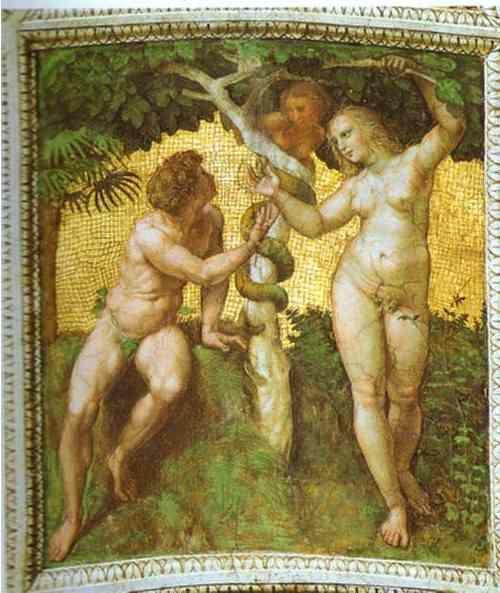
We reviewed yesterday's lesson in terms of archetypes. Students are to take the archetypal imagery from the Eden story and treat it as their own dream. Brainstorm personal interpretations and associations with the stories imagery and construct meaning in a personal essay. Primary archtypes: God, Adam, Eve, Tree, Serpent, Paradise, Forbidden Fruit. Due Monday.

Grade 10

Discussed the first three stanzas of "La Belle Dame sans Merci" by John Keats. (See yesterday's entry for link.) Reread the rest of the, the knight's response, and add to annotation already done.

Thursday, February 04, 2010

Genesis II / Poetry II

College Prep 12
  • Continued discussing Genesis 1, 2 and 3. Compared and contrasted language in 1 and 2.
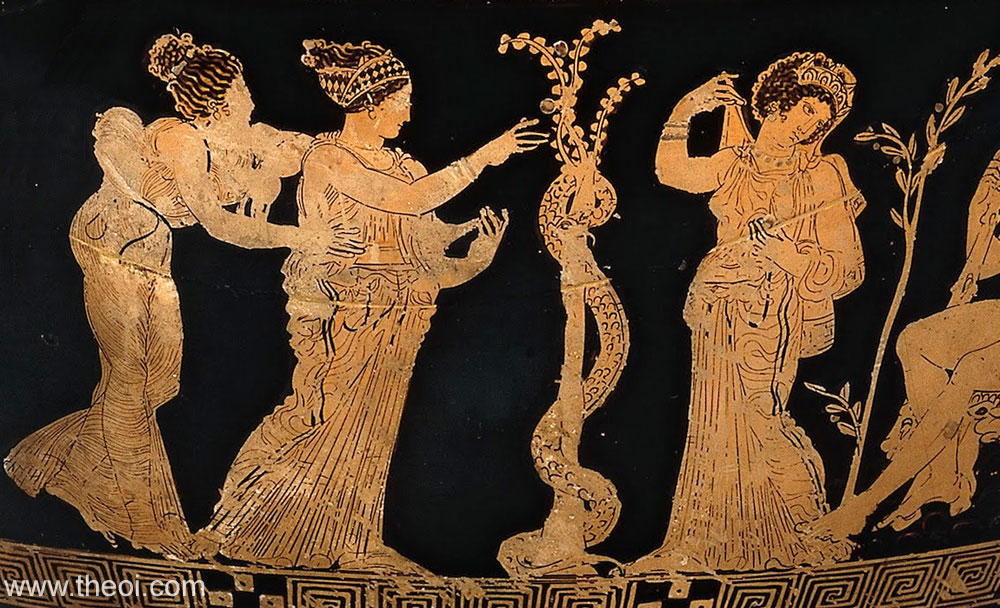
  • Garden of Eden: Viewed images of the Tree of Knowledge from other cultures with accompnaying serpent imagery: the Golden Fleece, Garden of the Hesperides, Buddha under the Bo Tree. Also discussed the parallel with the Cadeucis and the varying impulses from each story/image.
  • Why was Eve made from Adam's rib?
  • Associated the imagery with the concept of duality.
  • Discussed historical context: desert culture, Fertile Crescent, etc.
  • Excellent discussions in each class. Some very good ideas.
Grade 10
  • Checked homework. Students were reminded that all writing for this class is to be in complete sentences unless otherwise directed.
  • Discussed the importance of reading poetry out loud. Reviewed the definition of prosody.
  • Examined the poem "Metaphor" by Eve Mirriam

Tuesday, February 02, 2010

Genesis / Poetry I

College Prep 12
  • Yesterday, Genesis 1 and 2 was read in class (as literature/poetry/myth). Genesis 3 and the following worksheets had to done for HW.
  • Today the first few paragraphs of Genesis 1 were considered. The concepts of 'duality' and 'empiricism' were introduced. I.e.: We live in a dualistic unverse of opposites, the empirical nature of which is applicable up to the point of ideas... where things get problematic. What is evil? Was the Haitian earthquake 'evil'?
  • HW: In journals: What does, "Let us make humankind in our image, according to our likeness" mean?
Grade 10
  • Yesterday we went over the Julius Caesar and benchmark exams.
  • Begin poetry unit:
  • Poetry needs to be read with the correct attitude to be understood.
  • Understanding poetry is a process:
How to Interpret Poetry
1. Read it through. (out loud?)
a. Get initial impression/image/literal meaning/context
2. Second read
a. Examine vocabulary
b. Look for symbols and metaphors
i. free associate meanings/brainstorm
ii. group discussion if possible
iii. select meanings to match context
3. Third read
a. Make connections
b. Determine poem’s intent; what is being said at a figurative/abstract level.
c. Personal reaction
  • Example of b (i):
  • Example of free association: “O Rose, thou art sick.”
  • Rose: is capitalized=importance or person, love, beauty, feminine/woman
  • Sick: illness, flaw, imperfection
  • O: exclamation of surprise or fear, communicates speaker's tone
  • Thou art vs. you are: Thou art would be used to show respect and/or affection
  • Meaning: There is a serious/tragic flaw in something or someone important to the speaker connected with love or beauty. A flawed romance?

Thursday, January 21, 2010

The Sound of Silence & Comfortably Numb / Julius Caesar Exam (Essay)

College Prep 12
  • Students were told that an extra credit major grade will be possible for an original poem. Any submission has to demonstrate effort at crafting language and communicating something that is obviosly of great importance to the author.
  • We continued studying Paul simon's piece, "The Sound of Silence." Historical context was mentioned along with a theme of messianic failure.
  • "Comfortably Numb" was distributed. Lyrics were read individually, discussed in groups. Song was played. To be continued tomorrow.
  • Critical analysis of self-chosen piece due Monday.
Grade 10
  • Day 2 of Julius Caesar essay. Any not finished must be done for homework.
  • ATTENDANCE IS CRITICAL TOMORROW AND MONDAY. WE WILL BE TAKING THE BENCHMARK EXAM. ANY NOT COMPLETED DUE TO ABSENCE MUST BE FINISHED ON FRIDAY 1/29 AT 8 A.M.

Tuesday, January 19, 2010

Poetry VIII / Julius Caesar Act V Exam Part 1

College Prep 12
  • Thursday and Friday: Classes wrote a critical analysis of "The Sick Rose" based on the outline done for homework.
  • Today: Final discussion of "The Sick Rose." Essay due tomorrow.
  • Read "My Last Duchess" by Robert Browning.
  • Look over "My Last Duchess" for further discussion.
  • Bring in lyrics or poem titles (3) for project.
Grade 10
  • Begin Julius Caesar exam. Multiple choice today, essay tomorrow.

Wednesday, January 13, 2010

Poetry VII / Julius Caesar Act V , continued

College Prep 12
  • Check HW (finish outline for "The Chimney Sweeper" from Blake's Songs of Innocence. )
  • Discuss
  • Examine "The Chimney Sweeper" from Blake's Songs of Experience.
  • Discuss: will complete tomorrow.
  • Homework: Examine and annotate "The Sick Rose."
  • Note: Submission policy for the second semester is going to be modified. Students will no longer be able to email me work. If there are printing issues at home, students can email the work to themselves, access it at work and either print it out in school or paste it to a class folder in the Student Directory. Work will be graded electronically.
  • All work must be submitted by Friday!
Grade 10
  • Give back Act IV quizzes.
  • Continue Act V,
  • Finish tomorrow and view video.

Tuesday, January 12, 2010

Poetry VI / Julius Caesar Act V

College Prep 12
  • Discuss "The Chimney Sweeper" from Blake's Songs of Innocence.
  • Worked on outlining a critical analysis through the fourth stanza:
I. Intro


a. Literal

i. Young chimney sweeper comforts friend whose hair is cut off.

ii. Friend has a dream of being brought to a wonderful place by an angel. He’s encouraged.

b. Figurative

i. The dream is a metaphor that turns life and death upside down. They are living a kind of death, salvation (life) comes from death (heaven).

II. Stanza 1

a. Begins with a death, related with childlike matter-of-factness

b. Key words:

i. “my father sold me”

1. consequence of extreme poverty

ii. “’weep, ‘weep”

1. Play on words: child too young to say “sweep.” “Weep” elicits the grief/tragedy of the situation.

III. Stanza II

a. Key words:

i. Lamb, white hair (innocence)

ii. “soot cannot spoil your white hair?” Innocence can’t be tarnished?

IV. Stanza III

a. Tom’s dream

i. Sweepers locked in black (death) coffins

1. metaphor for their lives; death in life

ii. The Angel

1. freedom, life, messenger, guardian, from God

2. bright key: moment of death, unlocking the coffin

iii. Imagery

1. green plain: contrast to black coffin; green = life
  • Finish last two stanzas plus conclusion for homwork.
  • Must have list of three poems (one favorite and two options) for critical analysis by Friday.
Grade 10
  • Review story, start Act V.
  • Will finish reading tomorrow.
  • Video on Thursday
  • Multiple choice exam on Friday.
  • Essay on Tuesday.

Monday, January 11, 2010

Poetry V / Julius Caesar Act IV Quiz

College Prep 12
  • Review projects, hand back
  • Add to poetry notes:
How to Write a Critical Analysis

1. Intro
a. Title, author
b. Comment on literal context and figurative/abstract meaning. (thesis statement)
2. Select and discuss meaning of imagery/metaphors/symbols to support your thesis.
a. Stanza by stanza
i. Refer back and forward for support
3. Conclusion
a. Author’s purpose (thesis statement)
i. What larger statement is being made?
  • Wrap up the Byron piece: What larger statement is Byron making with "So We'll Go No More A Roving?" (Life passes, we must let go, etc.)
  • Intro William Blake; historical context.
  • "The Lamb," From Songs of Innocence. Read, discuss.
Little Lamb, who made thee?
Dost thou know who made thee?
Gave thee life & bid thee feed,
By the stream & o'er the mead;
Gave thee clothing of delight,
Softest clothing, wooly, bright;
Gave thee such a tender voice,
Making all the vales rejoice?
Little Lamb, who made thee?
Dost thou know who made thee?

Little Lamb, I'll tell thee,
Little Lamb, I'll tell thee:
He is called by thy name,
For he calls himself a Lamb.
He is meek & he is mild;
He became a little child.
I a child & thou a lamb.
We are called by his name.
Little Lamb, God bless thee!
  • Read "The Chimney Sweeper" for homework.
  • Highlight, underline, make notes.
  • Poetry Project: Students will write a critical essay on a self chosen poem or song lyric. Names will be called at random for their choices as no one may do the same as another. First choice by Thursday.  Essay must include the poem or lyric.
Grade 10
  • Act IV quiz
  • Pg. 419 questions 1&2 (Must be finished for homework.)

Thursday, January 07, 2010

Poetry IV / Julius Caesar Act IV

College Prep 12
  • Notes on how to analyze a poem:
How to Interpret Poetry


1. Read it through. (out loud?)
a. Get initial impression/image/literal meaning/context
2. Second read
a. Examine vocabulary
b. Look for symbols and metaphors
i. free associate meanings/brainstorm
ii. group discussion if possible
iii. select meanings to match context
3. Third read
a. Make connections
b. Determine poem’s intent; what is being said at a figurative/abstract level.
c. Personal reaction
  • Distribute Bryon's "So We'll Go No More A Roving"
  • Read and analyze for discussion tomorrow:
So we’ll go no more a roving
So late into the night,
Though the heart be still as loving,
And the moon be still as bright.

For the sword outwears its sheath,
And the soul wears out the breast,
And the heart must pause to breathe,
And love itself have rest.

Though the night was made for loving,
And the day returns too soon,
Yet we’ll go no more a roving
By the light of the moon.
Grade 10
  • Finish Act IV
  • Discuss
  • Hand back Oration assignment
  • Review and discuss

Wednesday, January 06, 2010

Poetry III? / Julius Caesar Act IV Scene iii, continued

College Prep 12
  • The honors breakfast annhilated my second period class and the remaining five students were given a study hall.
  • Period 7:  Journal: How are we supposed to feel about the subject of the poem? What is the author’s purpose? 
  • Discuss.
  • Note: Deadline for essay rewrites is Friday, January 15th.
Grade 10
  • PSA: Timeline for rest of marking period is as follows: finish Act IV this week. Quiz next Monday. Finish Act V next week. This will leave about 5 school days for JC Exam and practice for Benchmark Exam before Regents week break.
  • Journal: summary of Act IV so far.
  • Continue reading. (Period 3,4 finish to line 228. Pd 8 finished the act.)

Tuesday, January 05, 2010

Poetry II / Julius Caesar Act IV Scene i,ii,iii

College Prep 12
  • Review Ghosts/Platoon essay structure. The essay should illustrate the transformation of both characters by describing who they are at the beginning of their stories and describing specific events from those stories that show how they changed. Those events should be connected to the quote and to the various stages of the hero journey.
  • Poetry: Journal- why did Simon use the word "underground" rather than "subway" in the title of the song?
  • Check reflection journals.
  • Discuss: brainstorm associations with the word "underground."
  • Listen to the song.
  • Discuss the poem one stanza at a time, identify key words, brainstorm associations, develop a character sketch of the "man."
  • HW: Another reflection journal on the poem based on todays class discussion.
Grade 10
  • Start reading Act IV aloud through scene iii. (pd 3 finished through line 106, pd 4 through line 64, pd 8 kine 152)

Monday, January 04, 2010

Poetry I / Julius Caesar Act IV Intro

College Prep 12
  • Usual post-holiday prep talk (It is really almost June now.)
  • Copied the defintion of and discussed:
  • Context: the parts of a written or spoken statement that precede or follow a specific word or passage, usually influencing its meaning or effect; the set of circumstances or facts that surround a particular event, situation, etc. (This is a weakness in many of the Platoon/Ghosts of War essays
  • In class journal: How to you read/process poetry. Share some answers and discuss.
  • Distribute "Poem on an Underground Wall" by Paul Simon:
The last train is nearly due,
The underground is closing soon,
And in the dark deserted station,
Restless in anticipation,
A man waits in the shadows.

His restless eyes leap and scratch,
At all that they can touch or catch,
And hidden deep within his pocket,
Safe within it's silent socket,
He holds a colored crayon.

Now from the tunnel's stony womb,
The carriage rides to meet the groom,
And opens wide and welcome doors,
But he hesitates, then withdraws
Deeper in the shadows.

And the train is gone suddenly
On wheels clicking silently
Like a gently tapping litany
And he holds his crayon rosary
Tighter in his hand.

Now from his pocket quick he flashes,
The crayon on the wall he slashes,
Deep upon the advertising,
A single worded poem comprised
Of four letters.

And his heart is laughing, screaming, pounding
The poem across the tracks rebounding
Shadowed by the exit light
His legs take their ascending flight
To seek the breast of darkness and be suckled by the night.

  • Read the poem, identify key/high content words.
  • Assign one stanza to each of six groups- discuss words chosen.
  • Last five minutes: hand back graded essays. Encourage conferencing for rewrites. These essays are worth three major grades. Rewrite can change two of them
  • HW: Reflection journal on the poem.
  • Reminder: 5 reflection journals each week! (Two should have been done over the break. 
Grade 10
  •  Usual post-holiday prep talk (It is really almost June now.)
  • New vocab:
  • 25. Context: the parts of a written or spoken statement that precede or follow a specific word or passage, usually influencing its meaning or effect; the set of circumstances or facts that surround a particular event, situation, etc.
  • 26. Cynical: Believing or showing the belief that people are motivated chiefly by selfish concerns; skeptical of the motives of others; Negative or pessimistic, as from world-weariness
  • 27. Altruistic (adj): unselfishly generous; concerned for others. (noun = altruism)
  • Journal: summarize story so far then discuss.
  • Read and discuss Act IV summary.
  • Will check crossword puzzles tomorrow and start reading the act.